
US LNG exports will shrink if margin pressure increases
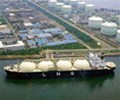
Soaring natural gas prices in the US are eroding the profit margins of the country’s LNG producers, a trend that is likely to deepen in coming years, forcing exports down as global competition heats up.
Benchmark Henry Hub gas prices in the US surged on Wednesday to a three-year high above $5 per million British thermal units (mmbtu) for January delivery thanks to a combination of cold weather in the US Northeast and a sharp increase in demand for raw materials from liquefied natural gas (LNG) plants.
At the same time, a global LNG glut, largely due to additional new supplies from the US, has driven prices lower in major demand centers in Asia and Europe.
The US will become the world’s largest LNG exporter in 2023, surpassing Australia and Qatar. Exports from its eight major LNG terminals hit a record 12 billion cubic meters (bcm) in November, up 20% from a year earlier, according to LSEG data.
Europe felt the biggest price impact as it absorbed 65% of US exports. Europe’s benchmark TTF gas price (TRNLTTFMc1) fell below 30 euros per megawatt hour in recent days, reaching its lowest level since April 2024.
The impact is exacerbated by weakening Chinese imports, which are expected to fall to around 65 million metric tons this year, the lowest figure since 2022, according to data from commodities analyst Kpler.
As a result of dynamics on both sides of the Atlantic, the spread between Henry Hub and TTF prices has narrowed to around $4.70 per mmbtu, the narrowest since April 2021, according to LSEG data.
This puts pressure on profit margins for US LNG exporters.
“US LNG has generated exceptional margins since the end of 2021, but those margins have returned to more normal levels now as the market has stabilized and new LNG capacity has come online,” said Saul Kavonic, head of energy research at MST Marquee.
These margins are now at risk of falling below normal levels. Many US LNG export contracts will fold if the Henry Hub-TTF spread falls below $4 per mmbtu. And if margins fall below $2, which is what LNG production costs, operators will almost certainly have to reduce production, according to Kavonic.
NO LNG OUTPUT CUTS… FOR NOW
On the one hand, this suggests that production will most likely not be limited next year as the spread is unlikely to break the $2 level. But this could change in 2027 and 2028 when more global supplies start to come in, mostly from the United States and Qatar.
Between 2025 and 2030, new LNG export capacity is expected to grow by 300 bcm per year, up 50% from 2025 levels, according to the International Energy Agency.
About 45% of capacity will come from the US, which accounts for more than half of the total capacity additions of 390 bcm per year since 2019, according to the IEA.
Capacity is poised to grow further in the coming months with the Golden Pass terminal, owned by Exxon Mobil XOM and QatarEnergy, and Cheniere’s Corpus Christi LNG expansion.
And this incredible growth is not slowing down.
A total of 83 bcm per year of new US LNG projects were given the green light for development between January and October 2025, making it a record year for final investment decisions, according to the IEA.
INCREASING POLITICAL RISKS
U.S. gas production is expected to increase from about 39 trillion cubic feet in 2025 to 42 tcf in 2030, according to the Energy Information Administration. However, in the same period, the share of gas demand from LNG producers will increase from around 13% to 20%.
This is a recipe for a tighter US domestic gas market.
It’s true, the combination of higher gas demand for LNG exports and increased domestic consumption due to energy-hungry data centers will continue to put pressure on gas prices in the US in the coming years, especially during the winter.
This could be exacerbated by reduced renewable energy generation that is expected to occur after the Trump administration backtracked on green energy support.
But this market dynamic could ultimately become a political liability, as President Donald Trump has promised to lower energy prices for US consumers.
That promise – and Trump’s goal of exporting more LNG – could become more complicated if US producers see profit margins increasingly eroded and start cutting back operations.
Looking at the current situation, it seems like it’s only a matter of time until that happens.
Source: Reuters
