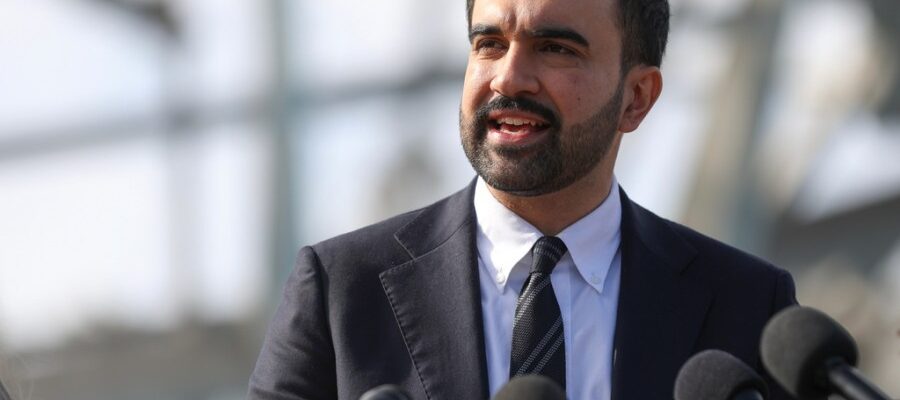
Mamdani’s victory creates opportunities and challenges for the Democratic Party

Zahran Mamdani’s landslide victory in the New York City mayoral race was noteworthy, both for that city and for the broader Democratic Party establishment.
Mamdani, a Muslim of South Asian descent and a self-described democratic socialist, defeated his closest challenger, former New York Governor Andrew Cuomo, by an impressive margin, and did so without the support of the mainstream Democratic establishment and big donors. He has challenged and thwarted the Islamophobic, anti-Semitic, and other vicious attacks on me from many influential quarters. He prevailed with the support of ordinary New Yorkers.
Mamdani’s victory highlights the divide between centrist/moderate Democrats and the more progressive wing. His success was built in part on a platform that addressed costs of living, affordable housing, child care, and foreign policy positions, particularly on Palestinian-Israeli issues.
Some Democrats may worry that a candidate with more extreme policy positions may be more vulnerable in the general election, especially in some swing districts. The establishment’s discomfort with Mamdani confirms this fact.
However, Mamdani’s victory may encourage young progressive candidates across the country to run bold campaigns to counter personal backlash, including racial and ethnic slurs. His victory signals that the Democratic Party is open to more progressive, youth-led grassroots movements. It also raises questions about how to balance this with broader electoral capacity, coalition preservation, and geographic diversity.
What strategic lessons can Democrats learn from Mamdani’s campaign?
1. Reconsidering the voter base: expanding the tent through effective, not supposed, coalitions.
2. Prioritize economic vulnerabilities over abstract messages.
3. Sponsoring non-traditional candidates and protecting them from defamation and abuse.
4. Lean into ideological diversity, do not run away from it.
5. Pair diversity with delivery.
The Democratic Party now faces a test: Can it translate Mamdani’s bottom-up politics into a broader governance vision without alienating moderates? His victory may not redefine the party overnight, but it has redrawn its map.
Mamdani’s win is more than just a local upset — it’s a message that the Democratic Party’s future may depend on listening to the energy pouring from its grassroots. Whether the party embraces this energy or resists it will determine not only its next candidate, but also its identity in the coming decade.
Mr. Osman Siddiq served as US Ambassador to Fiji, Tonga, Tuvalu and Nauru from 1999 to 2001. He was America’s first Muslim Ambassador and Chief of Mission.
